72 Hours in Cape Town

Rugged coastlines, a world-famous mountain, and a vibrant culinary and cultural scene—Cape Town is a city that makes an unforgettable impression, even in a short stay. For travellers seeking to immerse themselves in its natural beauty and sophistication, 72 hours is just enough to experience its best. Here’s a carefully curated itinerary designed for luxury travellers seeking to make the most out of the Mother City.

Let’s start with where you should stay in Cape Town. Here are two of our favourite luxury properties the city has to offer:

1. The Silo Hotel

One of Cape Town’s most iconic addresses, The Silo towers above the V&A Waterfront with panoramic views of Table Mountain. Its dramatic glass windows, striking interiors, and impeccable service create a sense of theatre from the moment you arrive. Guests can enjoy access to the rooftop bar and pool, private art tours at Zeitz MOCAA below, and a central location ideal for exploring the city.

2. Ellerman House

For those who prefer discreet, residential-style luxury, Ellerman House offers the intimacy of a private mansion with the refinement of a five-star stay. Overlooking Bantry Bay, it combines oceanfront terraces, curated art collections and tailored experiences with a sense of calm that feels worlds away from the bustle below.

Both properties represent the pinnacle of Cape Town luxury, each offering a distinct mood: bold and architectural at The Silo, or understated and timeless at Ellerman House.

Now, let’s take a look at the ideal itinerary to make the most of this windswept city.

Day 1: A Gentle Arrival and a Touch of Glamour

Once you’ve woken up rejuvenated and have treated yourself to the complimentary breakfast spread, ease into your Cape Town adventure by spending a leisurely afternoon at the V&A Waterfront. Browse local designer boutiques, savour fresh oysters, and soak in the harbour views. If you’re inclined, hop on a sunset yacht cruise—complete with champagne—to witness Table Mountain glow in golden hour light.

For a fine dining experience like no other, book a table at Siba the Restaurant or The Waterside, where world-class South African cuisine meets refined presentation. Expect vibrant flavours, thoughtful wine pairings and an atmosphere that celebrates the city’s coastal charm.

ET Recommends: Book your stay well in advance—both The Silo and Ellerman House are in high demand. A sunset yacht cruise on your first evening offers the most spectacular introduction to Cape Town, and securing a window table at dinner makes the experience all the more memorable.

Day 2: Table Mountain, Winelands & Coastal Elegance

Start your day early with a private guided ascent via the Table Mountain Aerial Cableway. The ride itself offers sweeping panoramas of the city, ocean and Robben Island. At the summit, take a short-guided walk to learn about the unique flora of the fynbos biome before enjoying a light breakfast with a view.

A short drive away lie the Cape Winelands—Stellenbosch and Franschhoek. Arrange for a private chauffeur or helicopter transfer for a seamless journey. Spend the afternoon tasting exceptional vintages at estates like Delaire Graff or La Motte, where art, architecture and terroir blend beautifully. A long, languid lunch on a shaded terrace surrounded by vineyards is a must.

Return to your hotel for some downtime. Later, reserve a table at La Colombe, one of the city’s most acclaimed restaurants. Here, artful plating and theatrical presentations make dinner feel like a performance.

ET Recommends: Visiting Table Mountain early in the morning ensures clear views and minimal queues, while Delaire Graff stands out for its setting and art collection. A chauffeured drive allows you to fully enjoy the Winelands without worrying about logistics, making the day effortlessly elegant.

Day 3: Ocean Breeze & Culture

Enjoy breakfast overlooking the ocean, then set out for one of the most breathtaking drives in the world—Chapman’s Peak. With the Atlantic on one side and dramatic cliffs on the other, this route is best experienced with stops at scenic viewpoints and perhaps a brief beach stroll at Camps Bay.

Come midday, explore Bo-Kaap, the historic Malay quarter, with a private guide who can share the neighbourhood’s rich cultural and culinary heritage. End with a casual yet elevated lunch at a chic café or bistro nearby.

If you’re staying at The Silo, step downstairs into Zeitz MOCAA for a final dose of contemporary African art. If at Ellerman House, explore the private gallery—a curated collection that tells South Africa’s artistic story. End your journey on a rooftop terrace or your private balcony, watching the sun dip behind Table Mountain.

ET Recommends: Including a few photo stops along Chapman’s Peak elevates the drive into a scenic experience, while a guided walk through Bo-Kaap adds depth and context to your cultural exploration. Timing your final moments in the city to coincide with sunset is the perfect way to end your Cape Town stay.

Ready to explore Cape Town in style? Eastern Travels curates bespoke itineraries with the finest accommodations, exclusive experiences and seamless logistics—so your time is spent savouring, not planning.
India’s Wild Heart Calls: A Traveller’s Guide To Unforgettable Safaris

India’s Wild Heart Calls: A Traveller’s Guide To Unforgettable Safaris

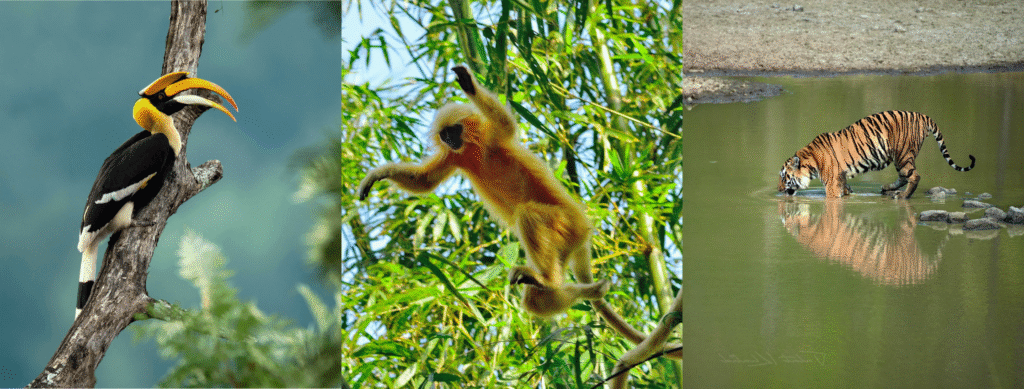
From the grasslands of Assam to the teak forests of Central India, India offers some of the world’s most diverse safari landscapes. Whether you are planning your very first wildlife holiday or returning to explore lesser-known reserves, here’s a structured guide to help you choose the right safari destination, understand when to travel, how to get there, and where to stay.

Safari Destinations & Regions

Central India (Madhya Pradesh & Chhattisgarh)

What to expect: Expansive sal forests, open meadows, and perennial waterholes where the drama of the jungle unfolds. Central India is widely considered the heart of tiger country, with well-established safari infrastructure.
Go to see: Tigers, leopards, sloth bears, barasingha (swamp deer), gaur, and an impressive variety of birds.
Where to stay: Bandhavgarh: Mahua Kothi, Samode Safari Lodge; Kanha: Banjaar Tola by Taj Safaris, Singinawa Jungle Lodge; Pench: Jamtara Wilderness Camp, Pench Tree Lodge; Satpura: Reni Pani Jungle Lodge, Bori Safari Lodge.

ET Recommends: For first-time travellers, Kanha offers a balanced mix of landscapes, luxury stays, and reliable tiger sightings. For seasoned visitors, Satpura’s walking safaris provide an entirely new way to experience the forest.

Rajasthan & Northern India

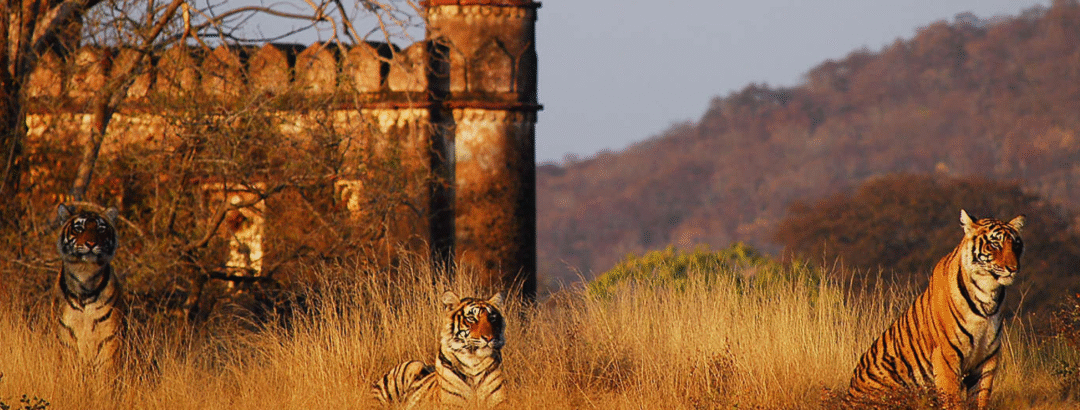
What to expect: Dry deciduous forests framed by dramatic forts and lakes. Proximity to Jaipur or Delhi makes these parks among the most accessible in the country—ideal for shorter luxury breaks.
Go to see: Tigers in Ranthambore, often sighted near ancient ruins and lakes; Asian elephants, leopards, and gharials in Jim Corbett.
Where to stay: Ranthambore: Aman-i-Khás, SUJÁN Sher Bagh; Jim Corbett: Aahana Resort, Taj Corbett Resort & Spa.

ET Recommends: Ranthambore is perfect for a first safari, combining heritage settings with high tiger visibility. Return travellers will appreciate the contrast of Jim Corbett’s Himalayan foothill landscapes and birdlife.

Gujarat’s Gir

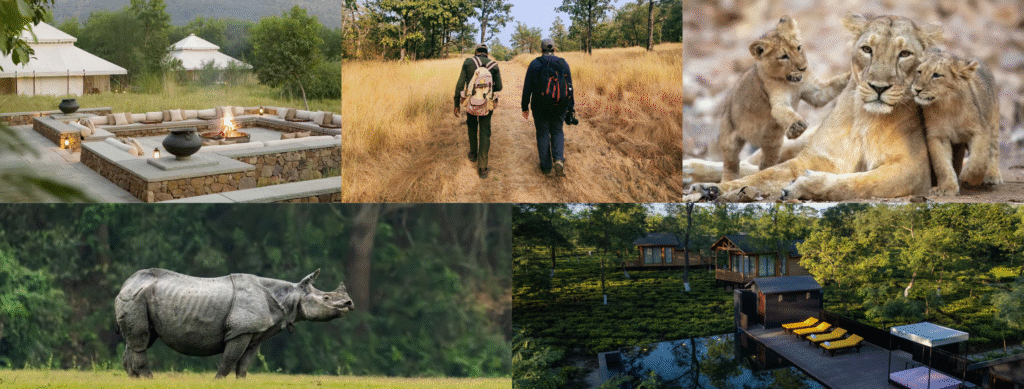
What to expect: Rugged scrubland and dry teak forests where the Asiatic lion still roams free—the only place in the world to see this subspecies in the wild.
Go to see: Asiatic lions, leopards, striped hyenas, marsh crocodiles, and over 300 species of birds.
Where to stay: Postcard Gir, Aramness Gir.

ET Recommends: Stay at Aramness Gir for its contemporary safari design and expert guiding—the ideal base to explore the lion’s last habitat.

Northeast & Floodplains

What to expect: Vast floodplains, tall elephant grass, and dynamic wetland ecosystems. This region feels entirely different from the teak and sal forests of central India.
Go to see: The Indian one-horned rhinoceros in Kaziranga, along with elephants, swamp deer, wild buffalo, and migratory birds.
Where to stay: Kaziranga: Diphlu River Lodge, Borgos Resort; The Postcard at Durrung Estate, Assam.

ET Recommends: Combine a stay at Diphlu River Lodge with safaris across Kaziranga’s multiple ranges to see rhinos in their element, alongside dramatic birdwatching opportunities.

Southern India & The Western Ghats

What to expect: Rolling hills, shola-grassland mosaics, and wildlife corridors connecting elephant habitats. A quieter region with excellent biodiversity and fewer crowds.
Go to see: Elephants, tigers, leopards, and endemic bird species.
Where to stay: Mudumalai/Nilgiris: Jungle Hut, Kurumba Village Resort.

ET Recommends: Opt for the Nilgiri Biosphere region for a slower, more intimate safari, where elephants and birdlife often steal the show.

When to Go & How to Get There

Best time to visit:
The safari season begins in October with the months of October to June being ideal for safaris, and February to April offering the clearest sightings as the foliage thins. May and June can be uncomfortably hot, but are rewarding months as animals congregate near waterholes. Most parks close during the monsoon (July to September).

Getting there:

  • Bandhavgarh, Kanha, Pench: Jabalpur, Nagpur or Raipur airports.
  • Ranthambore: Jaipur airport or Sawai Madhopur railway station.
  • Jim Corbett: Dehradun or Pantnagar airports; Kathgodam railway station.
  • Gir: Rajkot or Diu airports.
  • Kaziranga: Guwahati airport.

Permits, Bookings & Safari Rules

Safari permits are limited and open for booking up to 120 days in advance. Each vehicle is allocated a specific zone and time slot, with morning and afternoon drives being the standard.

When deciding where to safari in India, your choice will often depend on whether you are setting out on your very first wildlife holiday or returning for a deeper, more nuanced experience. If you are planning your first safari, start with destinations such as Ranthambore, Bandhavgarh, or Kanha. These parks balance accessibility with reliable big cat sightings and premium lodge options. For returning travellers, the thrill often lies in venturing further afield. Satpura offers walking safaris, Kaziranga is unmatched for rhinos, and Gir introduces you to lions—experiences that expand the definition of an Indian safari.

India hosts nearly three-quarters of the world’s wild Bengal tigers, but its safaris extend far beyond this majestic predator. From lions in Gir to rhinos in Kaziranga and elephants in the Western Ghats, each region tells a distinct story.

At Eastern Travels, we believe every safari should be designed around you—whether it’s a first glimpse of a tiger or a return journey in search of rarer species. We craft safaris that go beyond a checklist, offering encounters that linger long after you leave the forest.

Connect with us to get planning!

Your East African Safari Playbook

Your East African Safari Playbook

A region where vast savannahs meet volcanic highlands, wildlife coexists with ancient cultures, and tropical beaches rival some of the world’s best, East Africa offers an astonishingly diverse range of experiences that must be known fully to be appreciated. While Kenya and Tanzania often steal the limelight, the greater East African region is made up of several remarkable countries, each with marvels to behold.

If National Geographic and all your reading have only painted a picture of Maasai Mara and the Great Migration, we’re here to show you the vast beauty of East Africa and all it encompasses. Treat this as your cheat sheet – a safari playbook, if we could call it that. Starting off with a deep dive into the main players in East Africa, we’ll explore what makes each of them special, the top lodges that deserve a spot on your list, what to do and much more! Either way, we’ve got you covered from start to finish. 

Understanding the East African playground

  • Kenya: The ultimate all-rounder. Home to the Maasai Mara, Amboseli’s herds of elephants, the world’s last two northern white rhinos, and beautiful Indian Ocean beaches, Kenya provides a beautiful bush-to-beach experience, which is ideal for your first big ‘wow’ safari moment.
  • Tanzania: Famous for the Serengeti and snow-capped, soaring Mount Kilimanjaro, Tanzania is also home to the Ngorongoro Crater and the tranquil spice island of Zanzibar.
  • Uganda: Known as the “Pearl of Africa,” and truly wild at heart, Uganda offers the chatter of chimps and low grunts of gorillas echoing through mist-shrouded rainforests.
  • Rwanda: Land of a thousand hills –  here, dramatic vistas are endless. With incredible wildlife across volcanoes, montane rainforests, and sweeping plains, Rwanda is best known for its mountain gorillas and endemic species in the Albertine Rift.

While Ethiopia does fall within the Horn of Africa region of East Africa, this blog does not cover Ethiopia as part of its recommendations.

When to go

For a destination that finds its way to most bucket lists, choosing the best season is always a priority to ensure you’re making the most of your time. You’ve probably always heard and understood best season = dry season. However, take it from the experts – if there are three things to look out for while planning the WHEN of your trip, it’s these:

Tip #1: The Migration period can see up to 80-85 vehicles at a single river crossing, making clear viewings difficult and diluting the overall experience.

Tip #2: Planning your month of travel smartly could mean saving a fair amount, which could be used toward additional experiences (eg: Visiting Kenya in its Green Season means better pricing, fewer vehicles and fewer crowds)

Tip #3: Due to climate change and shifting patterns, traditional seasons are less predictable. It’s worth knowing that Uganda’s ‘dry’ season can still mean just less rain, and sometimes, visiting Rwanda in April, during the wet season, can mean a better chance of spotting gorillas on the lower slopes, thus avoiding extra walking. 

In conclusion, East Africa is a year-round destination, offering a variety of sights across seasons. Your ideal travel window depends on what you want to see, do and your budget.

Dry season (end June to October and December to February)

These months are ideal for game viewing across Kenya, Tanzania, and gorilla trekking in Uganda. July broadly marks the start of the Great Migration season in the Serengeti and Maasai Mara.

December – February – A second dry spell which marks calving season in Tanzania and good for gorilla trekking in Uganda and Rwanda.

Wet season (March to May and November to mid-December)

March to end-May marks the period of long rains. While some camps close temporarily, others offer attractive pricing during this time. The lush, green landscapes are great for photographers.

November to mid-December sees the short rains and is still generally good for travel.

The Coast – December to March and June to October

These months are ideal to soak up the sun and take refreshing dips in turquoise waters.

How long for?

While we recommend nothing less than a week for each country, if you’re looking to combine two or more places, we recommend a minimum of 10 days.

  • Kenya: 7–10 days for safari + Mombasa/ Diani Beach.
  • Tanzania: 10–12 days for the northern safari circuit + Zanzibar.
  • Uganda/Rwanda: 3–4 days for gorilla trekking. 5 days, if adding in cultural stops like Kampala and Kigali.

Important to note: While multi-country safaris are possible and encouraged, transit often requires charter flights and precise cross-border planning. Always talk to an expert to route your itinerary effectively.

How much?

Africa is more expensive than you think, and how much you spend largely hinges on your time of travel and where you choose to stay. 

One tip that always works – if you have a smaller budget, consider fewer days, but good camps. Selecting a premium property always means better guides, location, food and accommodation standards, which all come together to define your experience. 

Tip #2: Most lodges are small and fill up quickly.. Book in advance to benefit from a larger choice pool and attractive pricing. Booking as far out as 10-12 months in advance is common for East African holidays.

Average costs (per person, per night):

  • Mid-Range: USD 400 to USD 600 
  • Luxury: USD 800 to USD 1,290 and upward
  • Ultra Luxury: USD 2,000 and upward
  • Gorilla Permits: Typically in Rwanda USD 1,500, Uganda USD 700 (per person, per trek)
  • Beach Extensions: USD 200 to USD 300

Checklists beyond your packing list

In addition to all of your other planning, make sure you’ve factored in time for permits, mandatory vaccinations and post-shot recovery.

Mandatory and Recommended Vaccinations in East Africa by country:

  • Yellow Fever: Mandatory for entry into Kenya, Tanzania and Uganda (or if transiting through endemic areas). The yellow fever vaccination shot must be taken at least 10 days before travel for the vaccination to be valid.
  • Malaria Prophylaxis: Recommended for travel in Tanzania, Uganda and Rwanda.
  • Tetanus: Recommended for Uganda and Rwanda.

Inbound Travel Insurance: Mandatory for entry into Zanzibar. 

In addition to standard travel insurance you may have purchased for your holiday, starting October 1st, 2024, the Zanzibar government requires all visitors to have separate, inbound travel insurance. 

Permits: Reserve your permit at least six to twelve months in advance for Uganda gorilla trekking permits during high season.

Where to stay

Choosing the right accommodation can make or break a once-in-a-lifetime safari. Here are some guidelines while choosing accommodation for key locations:

  • Pick private conservancies and smaller camps for an intimate and more personalised experience.
  • For a more authentic experience, consider wildlife conservancies in Northern Kenya or the southeast for a change. Lewa and Sarara offer opportunities to interact with the Samburu, experience a riding safari. Ol Donyo offers heli flights and e-bike rides, among other unique experiences.
  • When choosing accommodation in Ngorongoro, your best bet is to stay on the crater rim.
  • Kenya’s coast is far more unspoiled in comparison to Zanzibar – if you want a coastal experience, pick Kenya.

Kenya:

  • Mara: Angama Mara, Mara Expedition Camp, andBeyond Kichwa Tembo Camp, Ishara Mara
  • Laikipia: Segera Retreat, Kicheche Laikipia Camp, Ol Malo, Borana Lodge
  • Diani: Alfajiri Villas, Swahili Beach Resort, Kinondo Kwetu

Tanzania:

  • Serengeti: Singita Sasakwa Lodge, Asilia Sayari Camp, Lemala Nanyukie
  • Ngorongoro: Ngorongoro Crater Lodge, The Manor At Ngorongoro, The Highlands by Asilia
  • Zanzibar: Zuri Zanzibar, White Sand Villas, Baraza Resort and Spa Zanzibar

Uganda:

  • Bwindi: Volcanoes Bwindi Lodge, Buhoma Lodge
  • Queen Elizabeth NP: Kyambura Gorge Lodge

Rwanda:

  • Volcanoes NP: Singita Kwitonda, One&Only Gorilla’s Nest
  • Kigali: The Retreat, Heaven Boutique Hotel


What a 10-Day East Africa Circuit Could Look Like

Intrigued by all East Africa has to offer? If you’re looking at where to start your adventure, here’s our recommended route:

Kenya oriented: Nairobi – Lewa Conservancy – Ol Donyo – Mara 

Kenya with Tanzania: Ngorongoro Crater or Tarangire National Park – Serengeti – Mara – Amboseli – Nairobi 

Kenya with Rwanda: Amboseli – Kigali – Volcanoes National Park 

Optional Variations:

  • Swap Tanzania for Uganda and go gorilla trekking in Bwindi.
  • Add Rwanda for a shorter gorilla experience and some time in Kigali.
  • End in Lamu (Kenya) for a quieter Swahili island escape.

Ready to uncover the best of East Africa? Let our experts curate your East African escape — tailored seamlessly for an unforgettable experience.

Six Ideal Days in Tuscany: Beyond the Day Trip

Six Ideal Days in Tuscany: Beyond the Day Trip

Tuscany—a name that conjures images of rolling vineyards, golden sunsets, and Renaissance masterpieces—is often squeezed into a day trip from Florence or Rome. But to rush through Tuscany is to miss its soul. This region deserves lingering. From hilltop towns to gourmet lunches, hands-on countryside adventures to thermal spa indulgence, Tuscany offers a timeless slice of Italy best savoured slowly. Here’s how to spend six ideal days immersing yourself in its charm—with experiences designed for couples and families alike.

Day 1: Arrival and a Taste of the Countryside

Ease into Tuscany’s rhythm by checking into a countryside villa or heritage property near Montepulciano or Chianti. One exceptional option is Castello di Velona Resort, Thermal SPA & Winery in Montalcino. This restored fortress offers sweeping views over the Val d’Orcia and its own natural thermal springs—perfect for easing into the Tuscan pace.

Spend your afternoon exploring a nearby winery. Estates such as Avignonesi and Castello di Ama offer guided vineyard walks, cellar tours, and tastings. Children are often entertained with grape juice samplings and visits to the estate’s animals or gardens.

ET Recommends: Dine al fresco under the stars with local specialities like pappa al pomodoro and handmade pici, either hosted by your villa or at the resort’s panoramic terrace restaurant.

Day 2: Siena and the Art of the Piazza

Begin your day in Siena, Tuscany’s gothic jewel. The shell-shaped Piazza del Campo buzzes with local life—ideal for children to roam safely and for couples to savour a coffee at a historic café. Climb the Torre del Mangia for panoramic views and visit the Siena Cathedral, where marble inlays and intricate mosaics captivate all ages.

Wander the medieval lanes for artisanal boutiques and gelaterias, then settle in a shaded courtyard to soak up the city’s character.

ET Recommends: Visit the Museo Civico inside the Palazzo Pubblico to admire Lorenzetti’s famous fresco cycle—one of the earliest visualisations of good governance in art.

Day 3: Val d’Orcia – A Living Postcard

The Val d’Orcia is the Tuscany of dreams—rolling golden fields, lone cypress trees, and honey-hued towns perched on hilltops. Drive through this UNESCO-protected region and stop at Pienza, renowned for its pecorino cheese and Renaissance architecture. It’s also a favourite for hands-on family cooking classes where you can learn to make gnocchi and tiramisu.

Further along, Montalcino welcomes wine lovers with Brunello tastings in centuries-old cellars. Meanwhile, the landscape invites lazy picnics, casual strolls, and postcard-perfect photo ops.

ET Recommends: Pick up fresh bread, cheese, and fruit for a spontaneous picnic between the hills of Pienza and San Quirico d’Orcia—simple, scenic, and soul-filling.

Day 4: A Day at Fattoria di Tegoni – Farm Life, the Tuscan Way

Today, swap sightseeing for something truly immersive at Fattoria di Tegoni, a family-owned ranch and working farm. Located near Monticchiello, it offers a full-day rural Tuscan experience ideal for both families and couples. Begin with an introductory horse-riding session across scenic trails, followed by olive picking (in season) or learning about traditional farming techniques.

Lunch is a hearty, homemade affair using ingredients from the estate—freshly pressed olive oil, hand-rolled pasta, seasonal vegetables, and locally raised meats. Children can interact with animals, while adults can unwind under the shade of old olive trees.

ET Recommends: Make time for the olive oil tasting and cheese-making workshop—fun, informative, and deeply local.

Day 5: Florence – A Renaissance Treasure Trove

While the countryside is restful, no visit to Tuscany is complete without a day in Florence. Begin with Michelangelo’s David at the Accademia Gallery, then explore the Uffizi with a family-friendly guided tour that brings Renaissance masterpieces to life. Stroll across the Ponte Vecchio and marvel at the Duomo’s architectural perfection.

Couples may enjoy a private art walk through the Oltrarno neighbourhood or a sunset aperitivo at Piazzale Michelangelo, with panoramic views over the terracotta rooftops.

ET Recommends: Take a short detour to Fiesole for lunch with a view, followed by a quiet walk through Roman ruins and peaceful olive groves.

Day 6: The Castelfalfi Experience & a Tuscan Farewell

End your journey with a blend of nature, gastronomy, and leisure at Castelfalfi—a restored medieval hamlet turned sustainable luxury estate. Here, you can choose between a romantic Vespa tour through the vineyards, a truffle hunt in the woods, or a cooking class using ingredients from the estate’s organic gardens.

Children can participate in kid-friendly workshops or enjoy the open-air pool and adventure trails. For adults, the estate’s spa and golf course offer time to unwind and reflect.

ET Recommends: Book a farewell dinner at La Rocca, Castelfalfi’s fine dining restaurant set in the village’s castle tower—elegant, local, and deeply atmospheric.

What makes Tuscany special isn’t just its beauty—it’s how that beauty unfolds slowly, rewarding those who take the time to look. Six days here allow you to soak in the culture, connect with the land, and enjoy meaningful moments—whether you’re on a romantic escape or travelling with loved ones.

At Eastern Travels, we believe Tuscany is not just a destination—it’s a lifestyle worth living, if only for a few perfect days. Let us tailor your journey, from handpicked stays and exclusive tastings to hidden hamlets and bespoke experiences that go far beyond the postcard.

Argentina 101: A Journey Through the Land of Silver

Argentina 101: A Journey Through the Land of Silver

From cosmopolitan cities and world-class wines to thundering waterfalls, alpine lakes, and Patagonian peaks, Argentina is as vast and varied as the continent itself. Spanning over 2,700 miles from north to south, it offers a little of everything—culture, cuisine, adventure, and luxury. Here’s your ultimate Argentina 101 guide: what to see, when to go, where to stay, and why this stunning country should be at the top of your travel list.

Why Choose Argentina?

Nature at Its Grandest: Think glaciers, desert canyons, subtropical rainforests, and alpine lakes—Argentina is a natural wonderland.
Culinary Culture: From grass-fed steaks to world-class wines and Francis Mallmann’s signature open-fire cooking, gastronomy is a major draw.
Adventure & Luxury: Trekking, skiing, kayaking, and horseback riding meet spa retreats, boutique estancias, and five-star stays.
Gateway to Antarctica: For the bold traveler, Argentina is the launchpad to the White Continent.
Welcoming Yet Underexplored: It’s safe, diverse, and surprisingly under the radar for Indian travelers, making it a true hidden gem.

When to Go: Understanding Argentina’s Seasons

Since Argentina is in the Southern Hemisphere, its seasons are the reverse of India’s:

  • Summer (Dec–Feb): Great for Patagonia and the Lake District. Expect warm days and long evenings.
  • Autumn (Mar–May): Mendoza’s vineyards glow with golden hues, and Buenos Aires becomes pleasantly mild.
  • Winter (Jun–Aug): Ideal for skiing in Bariloche and cultural exploration in the north.
  • Spring (Sep–Nov): Everything is in bloom—great for city strolls, wine tasting, and national parks.

Getting there:

  • Flights: Most international flights arrive in Buenos Aires. Domestic flights are efficient for covering long distances.

1. Buenos Aires: The Cultural Capital

The heartbeat of Argentina, Buenos Aires is a European-style metropolis brimming with history, creativity, and character.

ET Recommends:

  • Tango at Rojo Tango: Begin with a private lesson and end with a passionate dinner-and-show performance. A quintessential Argentine experience.
  • Street Art Tour in Palermo: Discover the stories behind Buenos Aires’ bold murals.
  • South City Stroll: Wander San Telmo’s cobblestone streets and La Boca’s colorful Caminito.

Where to Stay: Four Seasons Buenos Aires- A blend of Belle Époque elegance and modern sophistication. Located in the exclusive Recoleta district, it’s the perfect base to explore the city’s diverse neighborhoods.

2. Mendoza: Wine Country at the Foot of the Andes

A haven for wine lovers and outdoor enthusiasts alike, Mendoza is South America’s answer to Napa—with dramatic views of the Andes.

ET Recommends:

  • Wine Blending at Lamadrid Winery: Craft your own Malbec blend in the Uco Valley.
  • Estancia Day at Rancho e Cuero: Horseback rides, traditional asado, and scenic serenity.
  • Dine at Siete Fuegos: Francis Mallmann’s fire-driven dining is a must.

Where to Stay: The Vines Resort & Spa, Uco Valley- Nestled among vineyards with spectacular views of the Andes, this luxurious stay offers private villas, spa treatments, and a complimentary massage per stay.

3. Bariloche & The Lake District: Alpine Charm in Patagonia

Snow-capped peaks, Swiss-style chalets, and crystalline lakes make this northern Patagonian gem a year-round playground.

ET Recommends:

  • Victoria Island Excursion: Sail across Nahuel Huapi Lake and hike through ancient forests.
  • Seven Lakes Route: A dreamy drive punctuated by gourmet tastings.
  • The Andes Trail: A guided trek ending with a mountaintop gourmet picnic.

Where to Stay: Llao Llao Hotel & Resort – A lakeside Patagonian icon. Choose the classic Bustillo wing for old-world charm, or the modern Moreno wing for added amenities and lake views.

4. Salta & the Northwest: Canyons, Culture & Colonial Beauty

Argentina’s most underrated region, Salta blends red rock landscapes, Andean culture, and colonial architecture.

ET Recommends:

  • Cafayate Wine Tasting: Try Torrontés—the aromatic white grape unique to this region.
  • Quebrada de Humahuaca: A UNESCO-listed valley with surreal colors and ancient trade routes.
  • Ride the Tren a las Nubes: One of the highest railways in the world, offering sweeping views.

Where to Stay: House of Jasmines – A romantic hideaway at the foot of the Andes.

5. Puerto Iguazú: Jungle Meets Waterfall Majesty

A subtropical rainforest frames the Iguazú Falls—one of the world’s most powerful and breathtaking natural spectacles.

ET Recommends:

  • Devil’s Throat Viewpoint: Arrive early for the dramatic curtain of cascading water.
  • The Great Adventure: Jungle trek + boat ride into the falls = unforgettable.

Where to Stay: Gran Meliá Iguazú – The only hotel located inside the national park, offering direct trail access and unrivalled views of the falls from your room.

6. El Calafate & Patagonia’s Deep South: Glaciers & Untamed Beauty

Home to the famed Perito Moreno Glacier, this is where Patagonia’s wild heart truly beats.

ET Recommends:

  • Glacier Trekking: Strap on crampons and hike across shimmering blue ice.
  • Boat Safari on Lake Argentino: See towering icebergs up close.

Where to Stay: EOLO Patagonia’s Spirit – A luxe estancia blending elegance and authenticity, perfect for exploring the steppe.

7. Ushuaia: The End of the World

The world’s southernmost city and your gateway to Antarctica. Dramatic landscapes and stark beauty await.

ET Recommends:

  • Beagle Channel Cruise: Spot sea lions and penguins.
  • Tierra del Fuego National Park: Hike to the edge of the continent.

Argentina is not a one-size-fits-all destination—it’s a tapestry of unforgettable regions, each offering something special. At Eastern Travels, we design journeys that flow seamlessly from one highlight to the next—private guides, handpicked stays, and immersive experiences. Whether you dream of sipping Malbec in the shadow of the Andes, tangoing under city lights, or cruising the Beagle Channel, we’ll help you arrive in style and fall in love—one province at a time.

Live Like Royalty: Scottish Castle Stays Worth Traveling For

Live Like Royalty: Scottish Castle Stays Worth Traveling For

Scotland’s rugged highlands, misty lochs, and dramatic coastlines are only half the story. The other half? Sleeping like royalty in castles that whisper secrets from centuries past. Whether it’s sipping whisky by a roaring fire or waking up to views of moody glens, a castle stay is the perfect way to wrap yourself in Scotland’s romantic spirit. At Eastern Travels, we curate these once-in-a-lifetime experiences with signature care—adding those thoughtful touches that make a holiday unforgettable.

Here’s our handpicked guide to the most enchanting castle stays across Scotland:

1. Inverlochy Castle Hotel – Fort William

Nestled in the shadow of Ben Nevis, Scotland’s tallest peak, Inverlochy Castle is the epitome of highland luxury. This 19th-century castle-turned-hotel has hosted royalty (even Queen Victoria!) and today pampers guests with Michelin-starred dining and antique-filled suites.

Why stay here:

  • Gourmet restaurant by Michel Roux Jr.
  • Views of lochs and mountains straight from your window
  • Activities like fishing, clay pigeon shooting, and falconry

Perfect for: A romantic break or serene pause after an active highland tour.

2. Dalhousie Castle – Near Edinburgh

A true 13th-century fortress just 30 minutes from the capital, Dalhousie Castle offers all the medieval charm with none of the drafty discomfort. Enjoy richly decorated rooms, a spa set in the old dungeon, and an atmospheric dining experience in the candlelit Dungeon Restaurant.

Why stay here:

  • Oldest continuously inhabited castle in Scotland, now a luxurious hotel
  • Falconry experiences on the castle grounds
  • Proximity to Edinburgh—perfect for blending history with city comforts

Perfect for: First-time castle-goers and those who want a blend of legend, luxury, and location.

3. Stonefield Castle – Loch Fyne

Overlooking the tranquil waters of Loch Fyne, this 19th-century baronial castle blends Victorian elegance with rugged west coast beauty. Surrounded by woodlands and private gardens, it’s a peaceful base for exploring the Argyll region—famous for seafood, sea lochs, and scenic drives.

Why stay here:

  • Panoramic loch views from many rooms
  • Ideal base for exploring west Scotland’s coastline and villages
  • Fresh local seafood served in the castle’s fine dining restaurant

Perfect for: Couples or small families seeking calm, comfort, and natural beauty.

4. Kinnaird Castle – Angus

A hidden gem in the east of Scotland, Kinnaird Castle has been home to the Carnegie family for over 600 years. While still privately owned, guests can stay in the castle’s luxurious apartments or opt for exclusive hire of the estate. The experience feels like stepping into a well-guarded secret!

Why stay here:

  • Stay in self-contained, exquisitely furnished apartments
  • Enjoy river walks, tennis courts, and access to woodlands and private gardens
  • Bespoke local experiences can be arranged—from chef-prepared dinners to whisky tastings

Perfect for: Discerning travellers seeking privacy, authenticity, and old-world charm.

Tips for Planning Your Castle Holiday

  1. Book early: Many castle properties are small and exclusive—especially those available for private use only.
  2. Customise your stay: From whisky tastings to falconry, many castles offer bespoke experiences you won’t find elsewhere.
  3. Combine history with comfort: These aren’t your cold stone relics—expect Egyptian cotton sheets, gourmet meals, and spa baths in most rooms.
  4. Use a trusted travel advisor: At Eastern Travels, we not only secure the best rooms but also include perks like room upgrades, early check-in, and curated local experiences.

Castle stays aren’t just about where you sleep—they’re about stepping into the stories of knights, queens, and clans. Whether you’re gazing out over Loch Ness, sitting with your loved ones by a stone fireplace, or wandering through rose gardens in bloom, you’ll experience Scotland the way it was meant to be lived: royally.

Ready to check-in where the history books end? Let Eastern Travels curate your perfect Scottish escape—one turret, tartan, and dram at a time.